
Where Should a Porta Potty Go on Site?
Pick flat ground first. A standard porta potty sits about 44 by 48 inches on its base and stands roughly 92 inches tall, so it needs a footprint bigger than the unit itself once you add door swing and foot traffic. Keep it off soft dirt or a slope; it can tip, and the service truck cannot pump it safely on uneven ground.
Sun matters too. In Jackson summers, a unit facing full afternoon sun bakes. Angle the door away from direct south exposure where you can. Stay clear of storm drains and low spots that pool water after rain, since Jackson gets its share of heavy downpours.
For an ADA unit, ADA Standards section 304.3.1 calls for a 60 inch turning circle nearby, and the route to it needs the same 36 inch clearance under section 403.5.1. If you are clustering several units for a crew or a crowd, see the ADA accessible porta potty page and the placement guide for how many you need before you finalize the layout.
Do I Need a Permit to Place a Porta Potty in Jackson?
Placement in the public right of way, meaning a sidewalk, street shoulder, or city easement, needs confirming with the City of Jackson before delivery. We have not verified a specific local ordinance number for porta potty placement, so treat any right-of-way spot as a call you make to the city first, not an assumption. Private property, driveways, and job sites you control do not carry that same question mark.
This same right-of-way check applies to a roll-off dumpster. A dumpster placement permit is a separate question from a porta potty permit, and the dumpster placement permit cost varies by what the city requires for street or curb placement, so ask before the truck rolls. For full guidance on this across every rental type, the porta potty permit requirements page walks through what to confirm and who to call. Our construction site services page also covers permit questions that come up when a dumpster, a fence, and a toilet all land on the same lot.
What Access Does the Delivery Truck Need?
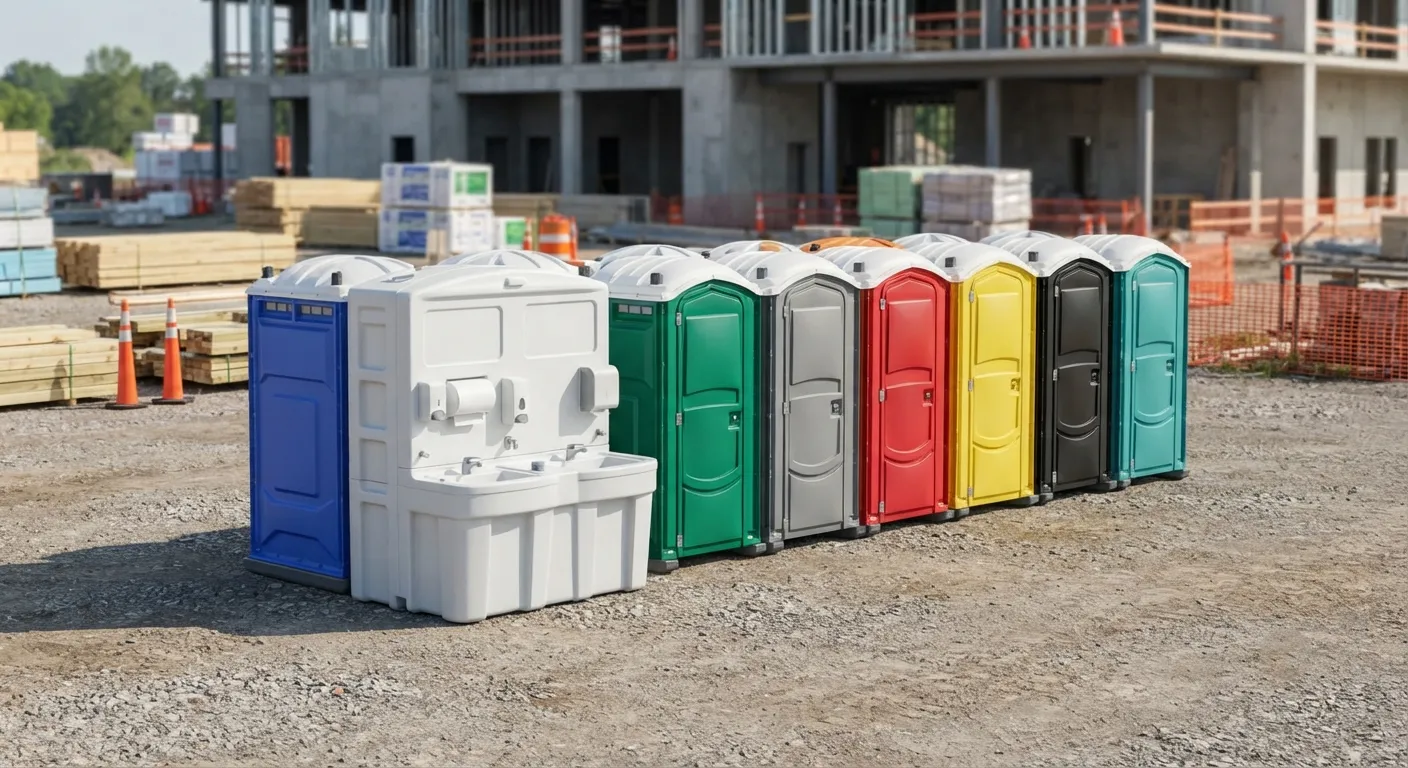
A roll-off delivery needs about 60 feet of straight clearance behind the truck to set the container down and pull away clean. That same clearance rule protects a porta potty delivery, since our trucks back in the same way. Narrow alleys, low tree limbs, and parked cars are the three things that kill a delivery window fastest.
If your site sits near Jackson and access is tight, towns like Clinton, roughly 9.7 miles west, or Flowood, about 10.2 miles east, sometimes have wider curb cuts on newer builds, which changes where we recommend placement on comparable lots. For a jobsite trailer, a mobile office trailer needs a similar flat, accessible pad, and mobile office trailer replacement doors are a common repair call when a door catches on uneven ground or gets clipped by equipment during a tight delivery. Keep 36 inches of clear path to any unit under OSHA 1926.51(c) for toilet facilities so crews are not climbing over material to reach them.
How Far From the Work Area Should a Unit Sit?
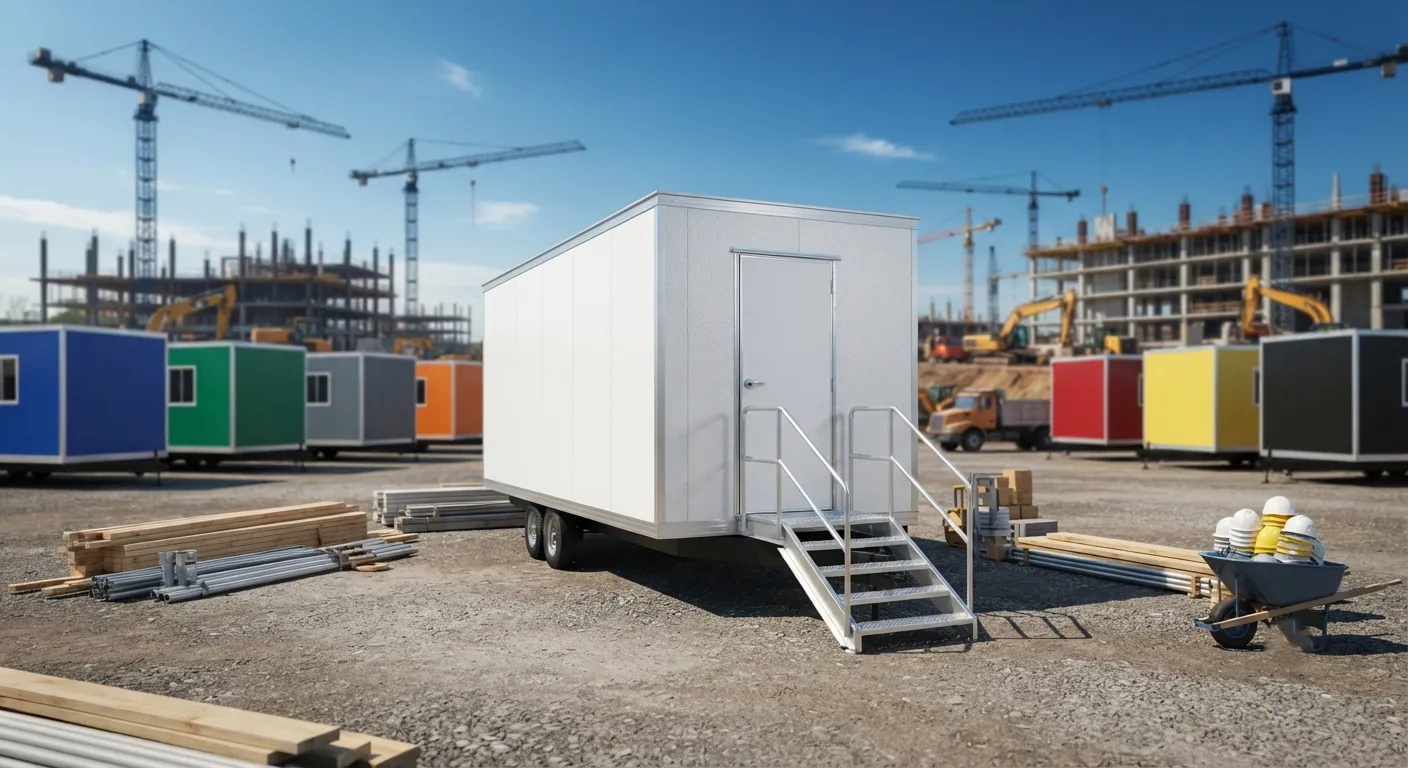
Close enough that a worker will actually walk to it, far enough that it is not blocking egress or a fire lane. ANSI/PSAI Z4.3 sets a baseline service interval of one visit per week for up to 10 users over a 40 hour week, and that schedule only works if the truck can reach the unit without threading through parked equipment or a fenced yard.
If you are running temporary fence around a site, leave a gate wide enough for both the porta potty and the service truck, and coordinate that gate location before fence installation, not after. The same goes for a handwashing station or a portable sink rental; Ozark River portable sink replacement parts are a real maintenance item on high-use sinks, and a sink that is hard to reach for service breaks down faster because nobody flags problems early. For septic work, a placement mistake costs more: a residential tank is typically pumped every 3 to 5 years, and the pump truck needs the same clear access a porta potty truck does, whether that is a Jackson property or a Placerville septic pumping service call in another market entirely. Our septic pumping service page has more on truck access for tank locations.
Frequently asked questions
How far from the work area should a unit sit?
Close enough for a short walk, clear of exits and fire lanes. Coordinate placement with any crowd control barrier or fence gate so the service truck has an open path on pump day, not a blocked one.
Can I move a porta potty myself after delivery?
Short shifts, yes, if it is empty and on flat ground. Once it has been serviced and has waste in the tank, call us to reposition it. Moving a full unit risks a spill and can violate the stable, slip-resistant surface standard in ADA Standards section 302.1.
Where should I place a unit for an event?
Near the crowd but not in a sightline to a stage, and never blocking an emergency lane. Our event restroom rental and festival restroom rental pages cover count and spacing for larger crowds in more detail.
Does placement affect how often it gets cleaned?
No, service frequency follows your plan under the how often are porta potties cleaned schedule, but poor access can delay a visit if the truck cannot reach the unit that day.
What ground surface works best under a unit?
Flat, compacted gravel, asphalt or concrete works best. Grass is fine short-term but softens fast in wet weather, which matters given how often Jackson sees heavy rain in spring and summer.
Next step
Get a delivery date
Tell us the address, the dates and the headcount. We size the order and confirm the route.